
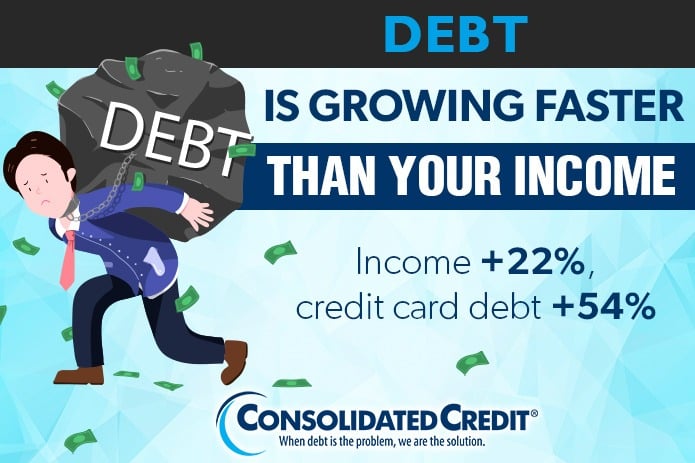
FORT LAUDERDALE, Fla., April 2, 2026 /Noticias Newswire/ — In recognition of Financial Literacy Month this April, new findings from Consolidated Credit reveal a concerning financial trend impacting households across the United States: while incomes have steadily increased, credit card debt is rising at a significantly faster rate.
Data from Consolidated Credit, one of the nation’s largest and most established credit counseling agencies, shows that consumers enrolled in its Debt Management Program have experienced a 22% increase in income since 2016. However, during the same period, their credit card debt has surged by 54%—more than twice the rate of income growth.
This growing disparity underscores the increasing financial pressure facing American families, as higher earnings are being outpaced by escalating debt obligations.
At the same time, borrowing has become significantly more expensive. The average credit card interest rate has jumped from 12.35% in 2016 to 19.58% today, with many people having APRs up to 27%. As a result, the share of income needed to manage credit card debt has climbed from 36.72% in 2016 to 45.91% by the end of 2025—a nearly 10-percentage-point increase.
These trends align with broader national data. According to the Federal Reserve Bank of New York, total U.S. credit card debt has reached a record $1.28 trillion, contributing to overall household debt of $18.8 trillion. At the same time, credit card delinquency rates have risen sharply in recent years, particularly among lower-income households, signaling growing difficulty in keeping up with payments.
“People are feeling it financially and they’re also feeling it mentally and emotionally, too,” says April Lewis-Parks, Director of Financial Education at Consolidated Credit. “People are under stress and telling us that they are suffering from anxiety and sleepless nights tied to money.”

Recent reports show that over 100 million consumers are unable to pay their credit card balances in full each month, while everyday expenses like groceries continue to be a major source of stress across income levels.
“The past 10 years have been a rollercoaster ride for the American economy, but it’s been mostly downhill for the average consumer,” Lewis-Parks adds. “With global instability driving up costs and inflation pressures continuing, this could be the toughest time yet for household budgets. Many families have already weathered a recession, a pandemic, and record inflation, this may be the tipping point.”
Financial Literacy Month: Time to Take Control
April is Financial Literacy Month, serving as a critical reminder that managing money today requires more than just budgeting—it requires understanding how to navigate debt, build resilience, and regain control.
To support consumers, Consolidated Credit is offering a free educational resource: The 2026 Money Confidence Roadmap https://www.consolidatedcredit.org/library/2026-money-confidence-roadmap/ The roadmap provides a clear, step-by-step quarterly guide to:
- Reducing financial stress
- Improving credit
- Making debt feel more manageable
- Building long-term financial confidence
Consumers can receive a free budget and debt analysis from certified counseling by calling 800-SAME-ME-2.
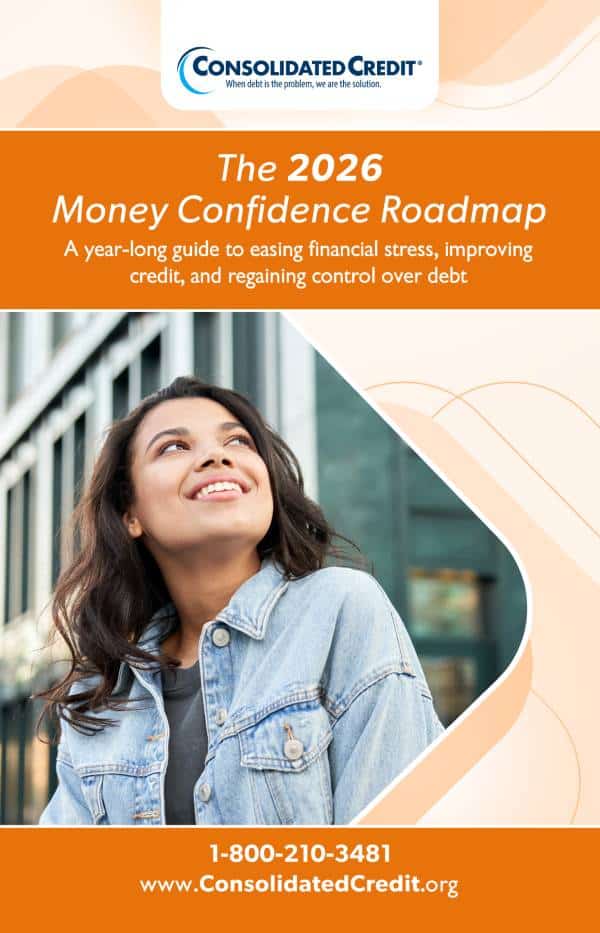
2026 Money Confidence Roadmap
This year-long guide helps reduce financial stress by bringing clarity to your finances, strengthening your credit, and making debt feel more manageable. Organized by quarter, it follows the natural rhythm of the year, offering practical ideas that support steadier decisions and growing confidence over time without rigid rules or pressure to start from scratch.
About Consolidated Credit
Consolidated Credit is one of the nation’s largest nonprofit credit counseling organizations, helping individuals and families overcome debt and achieve financial stability through education, counseling, and debt management programs.